




The Art of Choosing the Perfect Pet Nail Clipper: A Comprehensive Guide for Devoted Owners
The simple act of trimming a pet's nails is, for many owners, a source of considerable anxiety. The fear of cutting too short, of hurting a beloved companion, and the ensuing struggle with an uncooperative animal can turn a routine grooming task into a stressful ordeal for both parties. Yet, like so many challenges in pet care, the right tool can transform the experience. The selection of an appropriate nail clipper is not merely a matter of convenience; it is a fundamental aspect of responsible pet ownership, directly impacting the animal's comfort, safety, and long-term health. This essay serves as a comprehensive guide to navigating the surprisingly complex world of pet nail clippers, exploring the different types, their specific applications, and the crucial considerations that lead to the perfect choice.
To begin, one must understand that pet nail clippers are not a one-size-fits-all product. They are specialized tools designed to accommodate the vast diversity in paw size, nail structure, and temperament found across the animal kingdom. The primary and most fundamental decision lies in selecting the correct type of clipper. Broadly, these fall into two main categories: the guillotine-style clipper and the scissors-style or bypass clipper. A third, modern category involving grinders has also become increasingly popular, offering an alternative to the traditional cut.
The guillotine clipper is perhaps the most recognizable tool for dog grooming. Its design is simple yet effective: the nail is inserted into a stationary loop, and a sliding blade is activated by squeezing the handles, cutting the nail tip off as it passes through the opening. This mechanism offers a distinct advantage in precision. The stationary hole allows the groomer to visualize exactly where the nail is positioned before the cut is made, making it easier to avoid the sensitive quick—the blood vessel and nerve bundle inside the nail. This type of clipper is generally considered ideal for small to medium-sized dogs with nails that are not excessively thick or tough. However, it does have a limitation. The sliding blade can sometimes crush or compress the nail rather than slicing through it cleanly, particularly if the blade is not kept razor-sharp. A dull guillotine-style clipper is more likely to cause splintering and discomfort, which can make a nervous dog even more resistant to future trims.
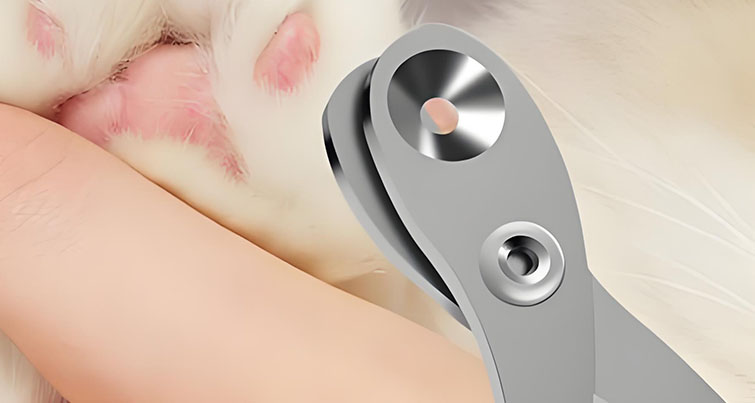
For larger breeds or dogs with thick, dense nails, the scissors-style or bypass clipper is often the superior choice. Resembling a pair of pruning shears, this tool features two curved blades that pass by each other to make a clean, scissor-like cut. The mechanical advantage provided by the longer handles and the bypass action generates significant force, allowing the blades to slice through even the toughest nails with ease and minimal crushing. This clean cut is less likely to cause splintering or leave a jagged edge. The scissors-style clipper is the tool of choice for many professional groomers and owners of large, powerful dogs. Its only drawback is that it can be slightly more difficult to position precisely on a very small nail, making it less ideal for tiny puppies or cats, where the guillotine style's guided insertion point offers a clear benefit.
In recent years, a significant shift has occurred in the philosophy of pet nail care with the advent of the rotary tool, or nail grinder. This device uses a high-speed spinning sanding drum or disc to slowly and gently file down the nail tip, rather than cutting it off in one go. The grinder offers a revolutionary advantage: it virtually eliminates the risk of cutting the quick. Because the nail is removed in minuscule increments, the process can be stopped the instant the owner sees the small, dark circle beginning to appear at the center of the nail's surface, indicating the quick is near. This allows for a much shorter, safer nail than is often possible with clippers. Furthermore, the grinder creates a smooth, rounded finish that is less likely to snag on carpets or upholstery and is generally preferred by owners who walk their dogs on hard surfaces. The primary challenges of the grinder are the noise and vibration, which can be frightening for some pets, and the time required to complete the task on all four paws. Successful introduction to a grinder requires patience, positive reinforcement, and a gradual desensitization process.
Beyond the fundamental choice of clipper type, the quality of the tool's construction is paramount. A poorly made clipper, regardless of its style, is a liability. The blades must be made of high-quality stainless steel that will hold a sharp edge. A sharp blade is essential for a clean cut that minimizes pain and nail splitting. Dull blades, whether on a guillotine or scissors-style clipper, will crush and tear the nail, causing discomfort and potentially leading to behavioral issues. The joint or pivot point of the clipper should be tight and smooth, allowing for precise control without wobble. The handles should be ergonomically designed, often with non-slip grips, to provide the owner with comfort and control during the trimming process. For scissors-style clippers, a safety lock is a valuable feature, keeping the blades closed when not in use and preventing accidental injury.
The choice is also profoundly influenced by the specific needs of the individual pet. For a cat, with its typically sharp, thin, and often retractable nails, a small, sharp pair of scissors-style clippers designed specifically for felines, or a high-quality guillotine clipper of appropriate size, is usually the best option. For a medium-sized, active dog with standard nails, a good guillotine clipper might be the perfect tool. For a giant breed like a Mastiff or a St. Bernard, with nails as thick as a human finger, a heavy-duty, scissors-style clipper is an absolute necessity. Even within a breed, individual nail characteristics vary. Some dogs have black nails where the quick is impossible to see, making a grinder the safest option, while others have clear or white nails that offer full visibility, making any clipper type easier to use safely.
In conclusion, the selection of a pet nail clipper is a decision that should be made with careful consideration of the animal's physical attributes, the owner's skill and confidence level, and the desired outcome for the grooming experience. There is no single "best" clipper, only the best clipper for a particular pet and owner combination. Whether one chooses the precision of a guillotine, the power of a scissors-style clipper, or the safety and control of a grinder, the ultimate goal remains the same: to perform a necessary grooming task with minimal stress and maximum comfort for the beloved animal. The perfect tool is the one that transforms a chore into a moment of gentle care, strengthening the bond of trust between a pet and its devoted owner.
Related Posts